
Strengthening Intergovernmental Coordination and Local Governance through Knowledge Exchange
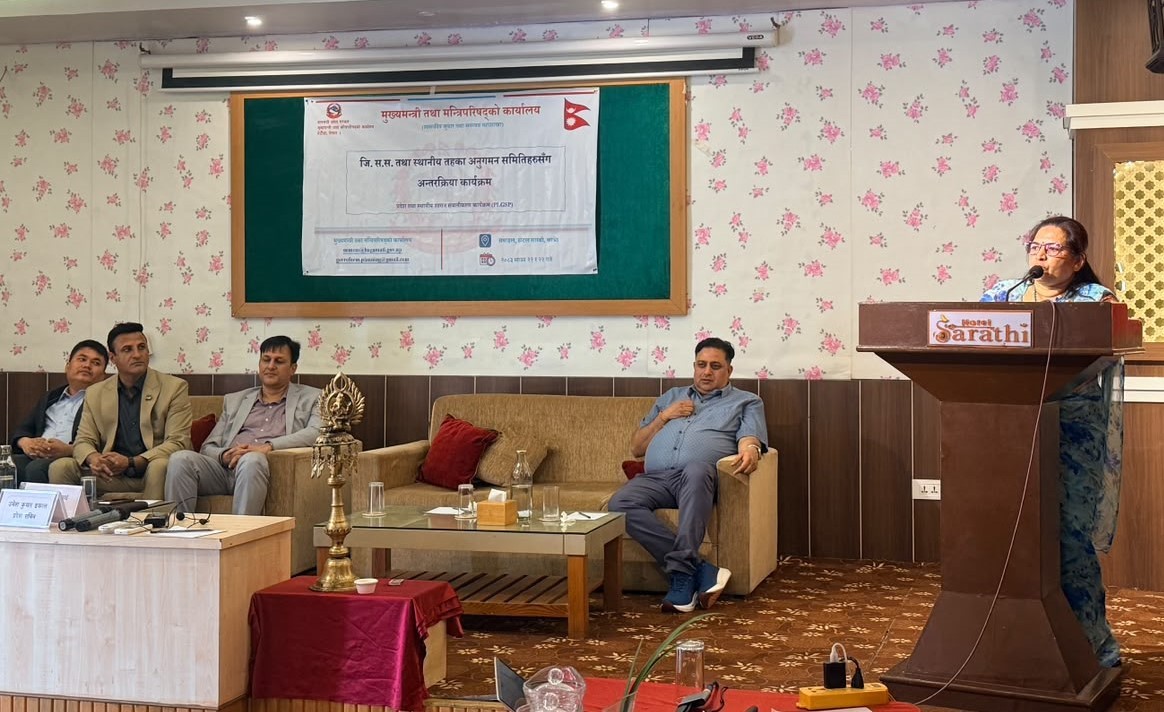
The Office of the Chief Minister and Council of Ministers (OCMCM), Bagmati Province, organized a two-day interaction programme in Dhulikhel to strengthen collaboration and knowledge exchange among key actors of Nepal’s federal governance system on 6-7 August 2026 in Dhulikhel. Supported by the Provincial and Local Governance Strengthening Programme (PLGSP), the event brought together 42 participants, including elected representatives and government officials from 13 District Coordination Committees (DCCs), seven local governments, the National Association of Rural Municipalities in Nepal (NARMIN), Municipal Association of Nepal (MuAN), Association of District Coordination Committees in Nepal (ADCCN), and provincial government institutions.
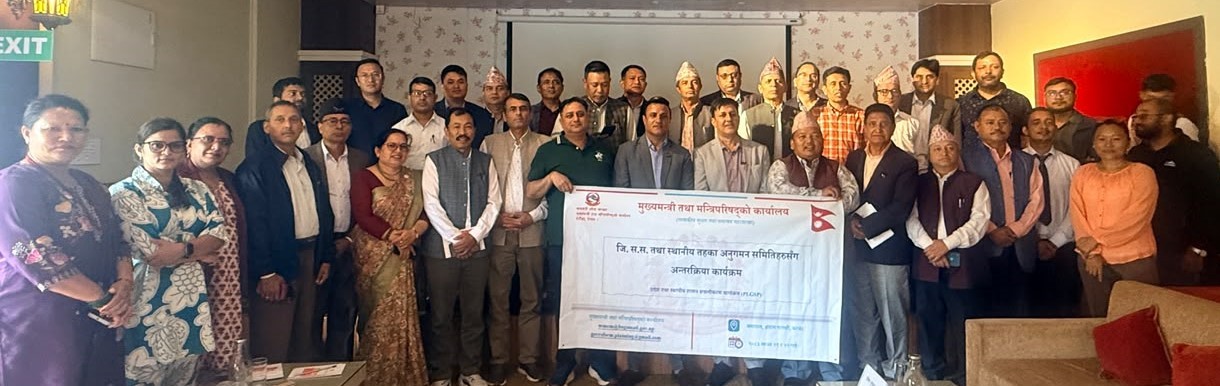
The programme served as an important platform for dialogue, peer learning, and capacity development on critical governance issues, including intergovernmental relations, public accountability, infrastructure oversight, and digital governance. Through a series of thematic sessions, participants explored practical challenges, emerging opportunities, and strategies for strengthening coordination and service delivery across different tiers of government.
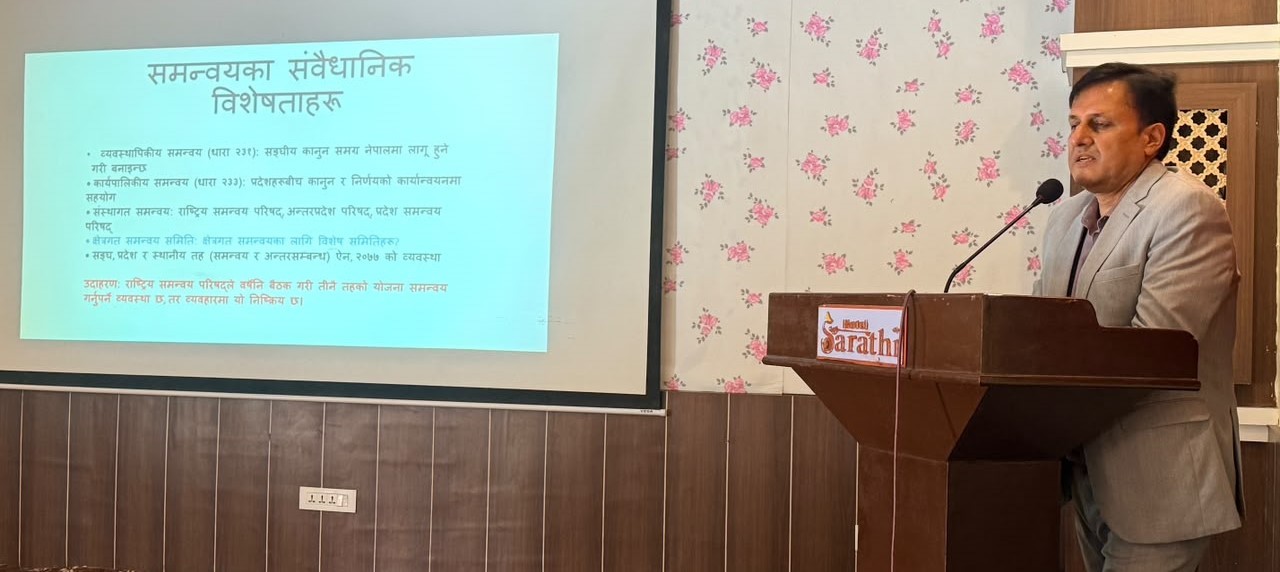
The programme commenced with a session on the constitutional principles of coordination, cooperation, and co-existence under Nepal’s federal governance system. Mr. Kamal Prasad Bhattarai, Principal Secretary of Bagmati Province, delivered a comprehensive presentation on the foundations of cooperative federalism, highlighting the respective roles and responsibilities of federal, provincial, and local governments. He discussed key implementation challenges and mitigation measures, while emphasizing the importance of effective intergovernmental coordination for achieving the objectives of federalism. Particular attention was given to the role of the Provincial Coordination Council in facilitating dialogue and collaboration between provincial and local governments. The session also highlighted the provincial government’s monitoring and support functions, including its role in promoting initiatives such as child-friendly local government declarations.
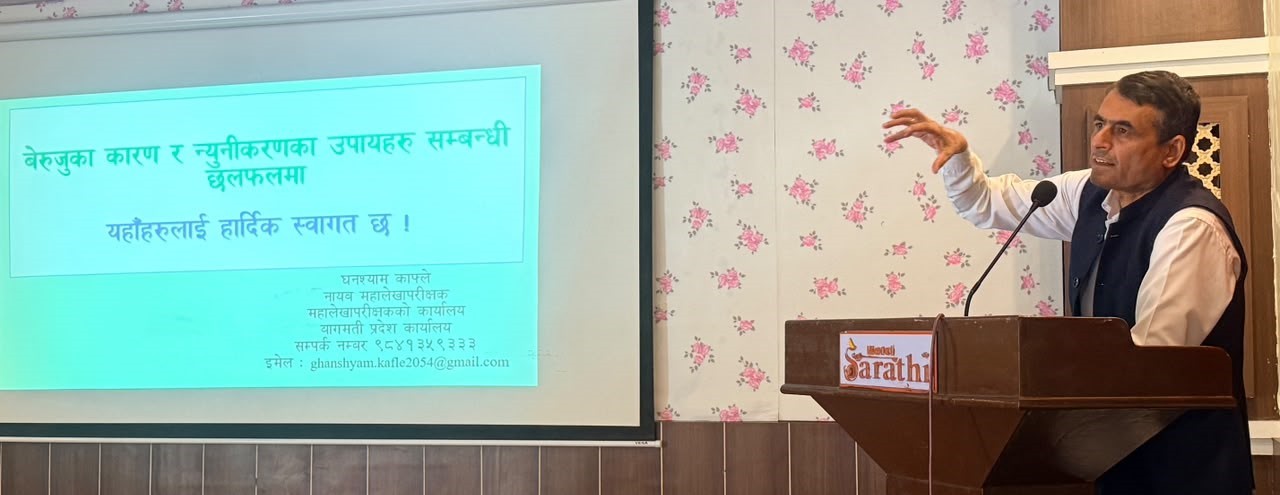
The second session focused on audit irregularities and mitigation measures and was facilitated by Mr. Ghanashyam Kaphle, Provincial Head of the Office of the Auditor General. The presentation provided an overview of Nepal’s audit system, the legal framework governing public audits, and the types of audit irregularities most commonly observed in local governments. Participants engaged in extensive discussions on practical challenges encountered in complying with legal and procedural requirements and raised concerns regarding gaps between regulatory provisions and implementation realities. Drawing on audit experiences and case examples, Mr. Kaphle emphasized the importance of strengthening internal control systems, enhancing procedural compliance, and fostering accountability, transparency, and institutional checks and balances within local government operations.
The second day began with a technical session on quality measurement procedures for infrastructure projects led by Er. Prabin Khanal. The session enhanced participants’ understanding of infrastructure quality assurance by covering different types of civil structures, construction stages, and key monitoring considerations throughout the project cycle. Special emphasis was placed on the review of Bills of Quantities (BoQs), verification of completed works, and compliance with technical specifications and quality standards. The discussion was particularly relevant for Deputy Mayors, Vice-Chairs, and local government representatives responsible for monitoring and overseeing public infrastructure investments.
Participants also explored the evolving role of District Coordination Committees under Nepal’s federal structure. Sharing experiences from the first term of elected DCC leadership, Mr. Deepak Kumar Gautam,
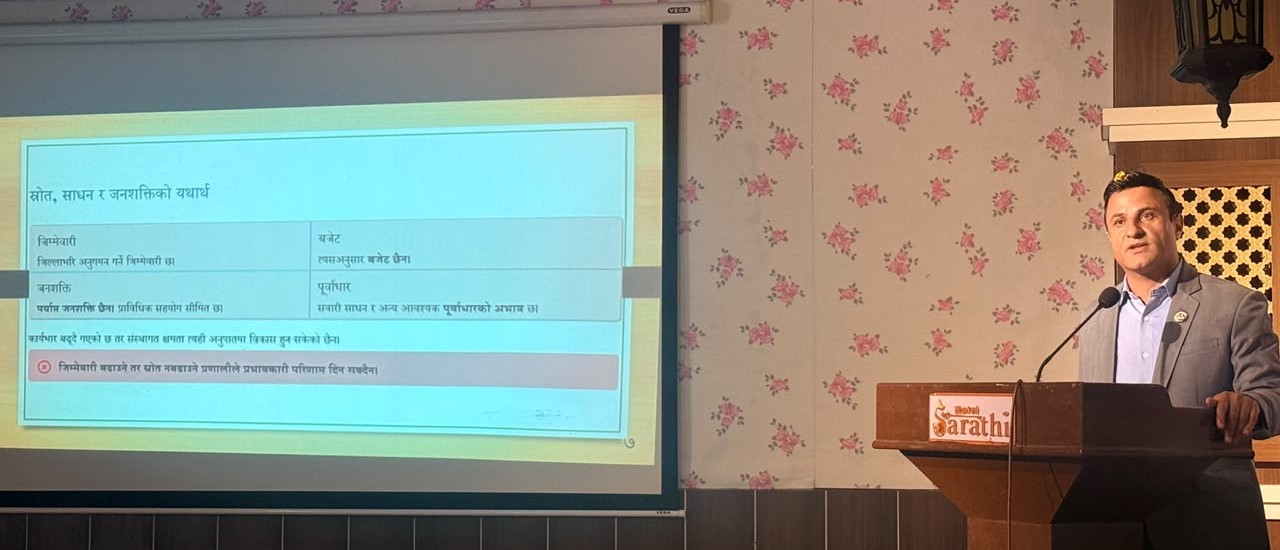
Senior Vice-Chair of ADCCN and Chairperson of DCC Kavrepalanchowk, reflected on the constitutional mandates, institutional responsibilities, operational challenges, and future prospects of DCCs. The discussion highlighted that despite being entrusted with important responsibilities related to coordination, monitoring, and facilitation, many DCCs continue to face resource constraints that limit their effective functioning. Mr. Gautam also showcased various knowledge products, advocacy initiatives, and institutional development efforts undertaken by ADCCN to strengthen the role and visibility of DCCs across the country.
The programme concluded with a session on e-governance and Business Process Re-engineering (BPR) facilitated by Mr. Milan Chandra Bhandari from the E-Governance Board. The session introduced participants to key digital systems currently being used across government institutions and provided a practical overview of the concepts, objectives, and implementation process of BPR. The presentation underscored the close relationship between digital transformation and process re-engineering, highlighting that the successful adoption of e-governance requires the simplification, redesign, and optimization of existing business processes. Participants gained valuable insights into how digital technologies and streamlined procedures can improve government efficiency, transparency, accountability, and citizen-centred service delivery.
The interaction programme strengthened knowledge sharing and mutual learning among provincial and local governance stakeholders while fostering a deeper understanding of constitutional responsibilities, public accountability mechanisms, infrastructure quality assurance, institutional coordination, and digital transformation. By creating a forum for dialogue and experience exchange, the programme contributed to enhancing the capacity of provincial and local governments to work collaboratively and effectively in advancing the objectives of cooperative federalism and improved public service delivery in Bagmati Province.