District Coordination Committees and Local Governments Exchange Lessons on Strengthening Results-Based Monitoring in Bagmati Province
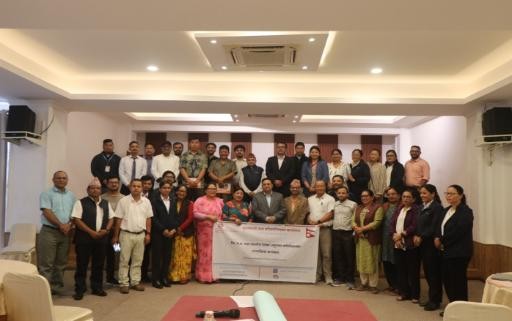
To strengthen results-based monitoring and evaluation systems across Bagmati Province, the Office of the Chief Minister and Council of Ministers (OCMCM), Bagmati Province, in coordination with the Provincial and Local Governance Support Programme (PLGSP), organized a two-day interaction programme between District Coordination Committees (DCCs) and Local Government Monitoring Committees in Dhulikhel, Kavrepalanchok, on 30 June–1 July 2026.
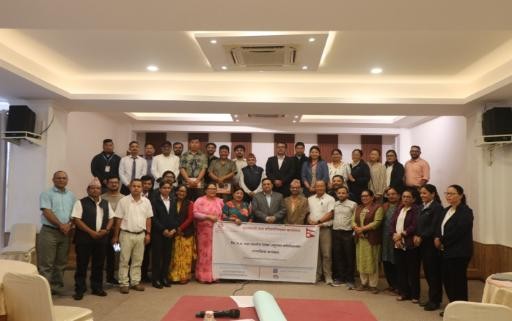
The programme brought together 44 participants (15 women and 29 men), including Deputy Mayors, Vice-Chairs, DCC representatives, monitoring committee members, and local government officials from five districts—Bhaktapur, Lalitpur, Kavrepalanchok, Sindhupalchok, and Ramechhap. The event aimed to strengthen monitoring and evaluation practices, promote peer learning, and enhance collaboration among provincial, district, and local governments.
Strengthening Monitoring Systems Through Collaboration
The programme was chaired by Province Secretary and Provincial Programme Director Mr. Umesh Kumar Dhakal, while the Chief Secretary of Bagmati Province attended as Chief Guest. In his opening remarks, the Chief Secretary emphasized the importance of effective monitoring and evaluation in ensuring transparency, accountability, and improved development results.

Participants shared practical experiences on monitoring development projects, discussed common challenges, and explored opportunities to improve monitoring effectiveness. Discussions highlighted that monitoring activities are often concentrated in easily accessible areas, while remote and geographically challenging locations receive relatively limited monitoring attention.
Learning from Good Practices and Practical Experiences
A technical session facilitated by governance expert B.K. Maharjan focused on monitoring infrastructure projects and results-based development management. Presenting the project cycle and monitoring framework, he emphasized that effective monitoring contributes significantly to construction quality, accountability, timely implementation, and cost efficiency.

During the discussion, Ms. Geeta Banjara, Deputy Mayor of Panauti Municipality, shared a practical example where effective monitoring helped save approximately NPR 20 million in a development project. Participants appreciated the example and stressed the need to systematically document and disseminate such good practices across local governments.

Participants also discussed challenges affecting infrastructure quality, including low-bid procurement practices, inadequate access to Bills of Quantities (BoQs), design documents, project specifications, and weak coordination among the three tiers of government. Several representatives noted that local governments are often expected to monitor projects implemented by federal and provincial agencies without having access to essential technical information.

Focus on Child-Friendly Governance and Technical Monitoring
The programme featured a session by child-friendly local governance expert Ashok Khanal, who highlighted the role of DCCs and local governments in monitoring and sustaining Child-Friendly Local Governance initiatives. He stressed that effective monitoring, stakeholder ownership, institutional arrangements, and sustainability measures are critical for achieving and maintaining child-friendly status.

A separate technical session led by engineer Prabin Khanal focused on quality assurance in infrastructure development. Participants explored practical methods for reviewing Bills of Quantities, assessing construction quality, understanding technical specifications, and monitoring compliance during project implementation.
Participants Identify Key Challenges and Recommendations
The interaction enabled participants to openly discuss monitoring challenges faced at the local level. Common issues raised included:
- Limited technical human resources and subject-matter experts.
- Inadequate follow-up on monitoring recommendations.
- Weak coordination among federal, provincial, and local governments.
- Policy ambiguities regarding the roles and responsibilities of different government levels.
- Delays in procurement processes and project implementation.
- Quality concerns in DPR preparation, environmental assessments, and project design.
- Insufficient use of technology and data-driven monitoring systems

Many participants emphasized the need to align annual plans with three- to five-year development priorities and strengthen results-based monitoring systems with clear indicators and outcome frameworks.
The discussions also highlighted the importance of social accountability tools such as public hearings, social audits, citizen feedback mechanisms, public information disclosure, and grievance-handling systems to improve transparency and accountability.
Peer Learning Generates Practical Solutions
Through group exercises and experience-sharing sessions, participants identified several recommendations to strengthen monitoring and evaluation systems. These included establishing standardized monitoring checklists and indicators, developing expert rosters for technical monitoring, enhancing capacity-building programmes for elected representatives and officials, digitizing monitoring systems, and institutionalizing regular joint monitoring and learning forums among the three levels of government.

Participants further stressed that development projects should be selected based on evidence, local needs, and development priorities rather than political influence. They noted that systematic planning and transparent project selection processes would help improve development outcomes and ensure equitable distribution of public resources.
Looking Ahead
Closing the programme, Province Secretary Mr. Umesh Kumar Dhakal appreciated the active participation and rich exchanges among participants. He noted that the issues and recommendations raised during the interaction would help inform future efforts to strengthen monitoring systems and intergovernmental coordination in Bagmati Province.

The programme concluded with a shared commitment to promote evidence-based planning, strengthen accountability mechanisms, improve quality assurance in development projects, and foster continuous learning among monitoring actors. Participants agreed that such peer-learning platforms provide valuable opportunities for knowledge sharing and should be organized regularly to enhance governance effectiveness and development results across the province.