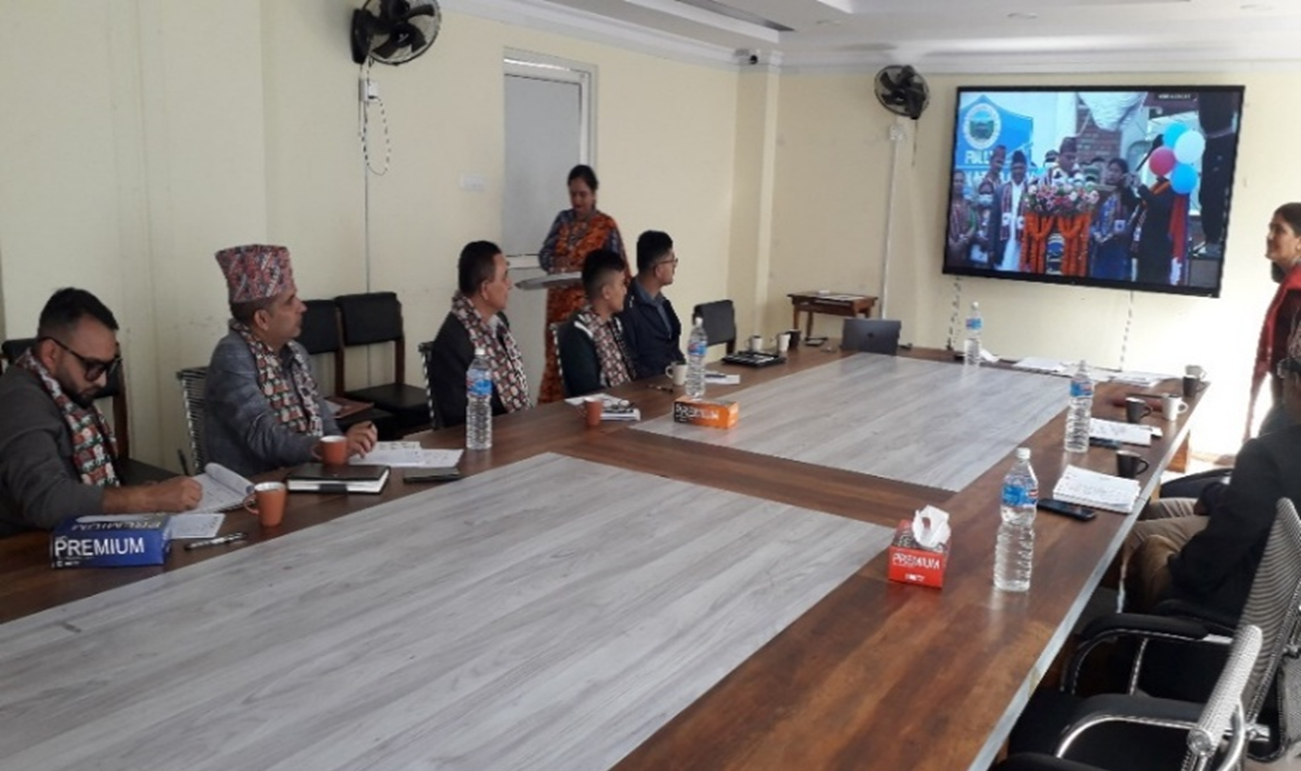
Building Futures: How Changunarayan Municipality Leads Child-Friendly Governance in Bagamati Province
When the Bagamati Province Child-Friendly Local Governance (CFLG) Monitoring Team arrived at Changunarayan Municipality on 6 November 2025, they were greeted with warmth, confidence, and excitement to show their CFLG progress and achievement. Mayor Jeevan Khatri along with elected representatives, and dedicated municipal staff including Deputy Mayor Ramesh Budhathoki, Chief Administrative Officer Mohan Kumar Shrestha, and Child Officer Anita Kumari Paudel stood alongside the chiefs of different departments of the municipality. Their presence showed a shared message: three years since the municipality became the first CFLG-declared municipality in the Kathmandu Valley, Changunarayan was ready to show how deeply the vision had taken root and been institutionalized.
The provincial monitoring team of five composed of officials from Office of Chief Minister and Council of Minister (OCMCM)and thematic ministries, Provincial and Local Governance Strengthening Programme (PLGSP) technical team members, and child rights experts had come not just to verify progress, but to reflect, learn, and draw replicable lessons for other municipalities. They wanted to see whether CFLG was alive in practice, not only documented in paper. What they witnessed was a municipality where child rights were not a slogan but a shared culture.
A Journey That Began with a Promise and Grew Into a Practice
|
|
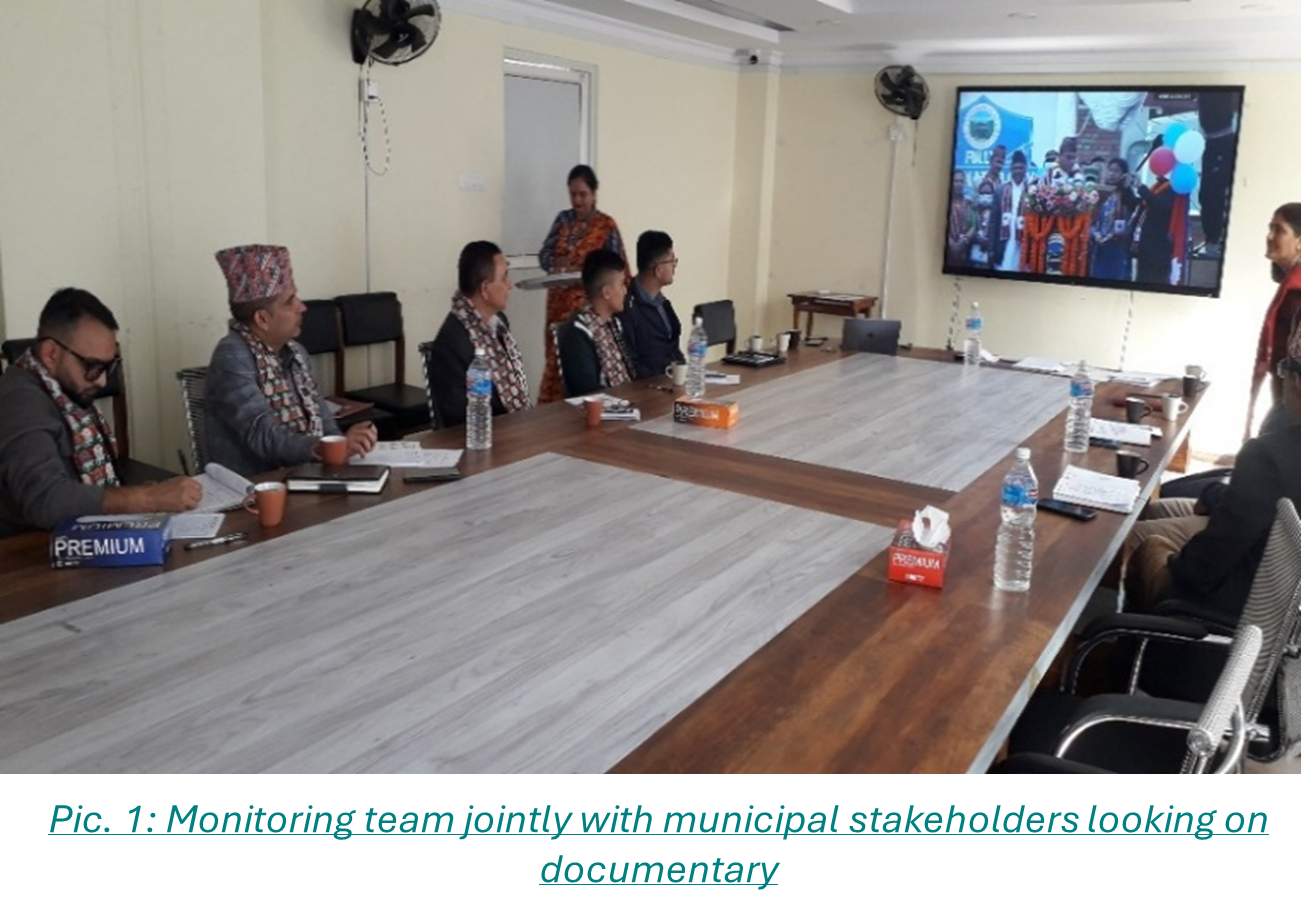
The visit began with briefing of municipal progress on children’s development then followed by a documentary recounting Changunarayan’s CFLG journey. As the video played, the hall came alive with memories: children speaking confidently in assemblies, parents joining awareness campaigns, teachers mobilizing schools, elected representatives committing publicly to the four pillars of child rights survival, development, protection, and participation as enshrined in Nepal’s Constitution, Children’s Act, and national and international child rights frameworks. The documentary also highlighted the municipality’s historic moment: more than 6,000 citizens participated in the 2021 declaration ceremony, where former National Assembly Chair Ganesh Timilsina formally announced Changunarayan as a CFLG municipality the twelfth in Nepal and the first in the Kathmandu Valley.
Declaring a CFLG entity is a rigorous process introduced by Ministry of Federal Affairs and General Administration (MoFAGA) more than a decade ago with revised CFLG Implementation Guideline, 2021. It requires:
- fulfilling 28 procedural steps,
- meeting 51 thematic and institutional indicators,
- establishing policies and committees,
- declaring all municipal wards as CFLG entities,
- expanding inclusive and child-friendly infrastructure,
- Guaranteeing meaningful child participation across planning and budgeting.
Changunarayan embraced this complexity with seriousness and creativity, which was reflected in the documentary, that the municipality took decisive actions to eliminate child labor in 52 brick kilns through joint agreements with entrepreneurs, ensuring enrolment of workers’ children in schools.
Since 2021, the municipality has:
- Allocated annual budgets including 9.8 million Nepali rupees in FY 2021/22 to child-focused programs and formed 5 years strategic plan.
- Strengthened child clubs and networks across all wards.
- Ensured that almost all schools, health posts, and public buildings are child-, gender- and disability-friendly.
- Created mechanisms such as the CFLG Urban Committee, Municipal Children’s Network, Ward Child Rights Committees/Networks, where children meaningfully participate in resource allocation and decisions making.
- Rolled out child protection funds, learning centres, hotel stickers to discourage child labour, community codes of conduct against child marriage, and various campaigns against harmful community practices.
Mayor Khatri highlighted the municipality’s significant investment in each annual plan considering the consistently allocated nearly 3 million Nepali rupees for children. “This is not an expense,” he said. “It is an investment. We are investing in our future citizens, our future leaders.”
Children Leading the Change Agents at Local Level
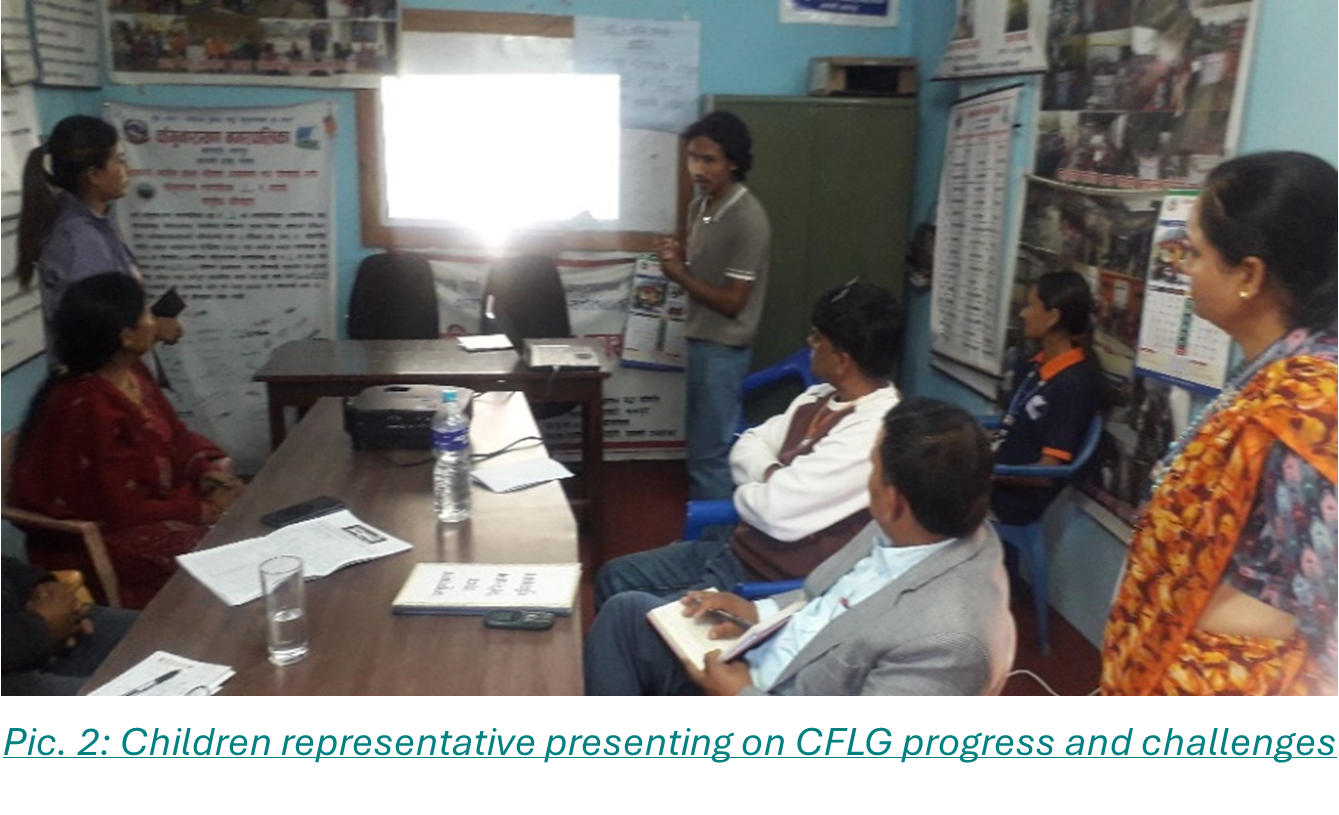
One of the most inspiring aspects for the monitoring team was meeting young leaders across wards. Their voices reminded everyone that CFLG is at its strongest when children themselves lead the agenda.
- In Ward 6, School Principal Raju Tamang and students highlighted progress in awareness among children and education rights yet also voiced challenges for children with disabilities calling for stronger support systems.
- In Ward 9, Ward Chair Ganesh Tyat and child representative Subas BK showcased campaigns on school enrolment, support sports and cultural activities and eliminate drug abuse and cybercrime.
Why Child-Friendly Governance Matters?
Child-friendly governance is a federal mandate guided by Nepal’s Constitution, the Local Government Operation Act 2074, the Children’s Act 2075, international conventions, and sectoral policies. It transforms children from passive beneficiaries into active citizens whose ideas shape local development.
For local governments, CFLG strengthens equity and inclusion, justice and accountability, sustainability of development results and a culture of participation and transparency. Changunarayan has demonstrated that when local governments centre children in their policies, the entire community prospers.
Progress, Gaps, and the Path Forward
The monitoring review highlighted impressive gains such as appointment of a CFLG focal person, active ward-level networks, child profile with data, reflecting child-responsiveness behaviour among municipal actors and local community, and visible improvements in infrastructure and child protection practices and various other indicators and practices.
However, some gaps remain, such as uneven progress across wards, the need for full implementation of the post-declaration investment plans, and further support for children with disabilities and special needs. Next steps identified included improving child-friendly infrastructure and allocating additional budgets for children’s overall development. Some improvement can be made in meaningful participation of children leaving no one behind. These are areas where municipality, province, and national actors must work together, with strong engagement from the National CFLG Forum and other community stakeholders.
Turning CFLG Declaration into Action: The Leadership Role of Bagmati Province in Strengthening Child-Friendly Governance
Under the leadership of OCMCM, the PLGSP Nepal’s flagship governance initiative has played a key role in helping institutionalize CFLG in municipalities. With the regular guidance from the actors of provincial government, programme has been instrumental in policy guidance, monitoring, capacity-development activities, strengthening children’s institutions and voices, fostering intergovernmental cooperation. Furthermore, PLGSP has supported the province in fulfilling its post-declaration monitoring mandate, ensuring that commitments are effectively translated into measurable actions.
Changunarayan's model proves that child-friendly governance is not an abstract ideal. It is a workable, replicable approach that any municipality can adopt with political will, coordinated action, and meaningful child participation.
PLGSP’s Continuous Backstopping: A Replicable Model for Nepal’s Federal Future
Sustaining the CFLG vision requires strong leadership, alignment of local policies with provincial and federal frameworks, adequate resource investment, cooperation across sectors, and recognition of children as agents of change, not mere beneficiaries.
Changunarayan has shown what is possible when a municipality commits wholeheartedly to its children. As PLGSP continues supporting provincial and local governments for rollout of national CFLG framework and providing technical assistance for effectiveness in child friendly governance at subnational level, the experience of Changunarayan offers a powerful model one that can inspire municipalities across Nepal to embed inclusive, child-centred governance into their own systems.
When children thrive, communities thrive. And when municipalities build with children at the centre, they build the future itself.